Authors:
Krisha Bawri, Sk Ayaan, Abhinandan Nandi, Drishti Sonthalia & Sashank Khemka
Summary
The consulting world is shifting from pedigree to performance. Top firms now hire from diverse universities, valuing problem-solving skills, practical experience, and a resilient mindset over a prestigious college degree. Success is achievable through strategic preparation and demonstrable impact.
- Introduction: Beyond the Ivy Myth
- The Modern Consulting Landscape
- The New Hiring Reality: What Firms Actually Look For
- Building a Strong Foundation Without the Ivy Tag
- Gaining Practical Experience That Counts
- Networking Without a Pedigree
- Resume and Interview Mastery
- Alternative Pathways into Consulting
- Mindset and Growth: Playing the Long Game
- Conclusion: Performance Over Pedigree
Introduction: Beyond the Ivy Myth
Consulting has always been seen as one of those “dream careers” which is considered challenging, intellectually exciting, and packed with opportunities to work across industries and even countries. But for a long time, there’s been this popular belief that only Ivy League or elite business school students can break into consulting.
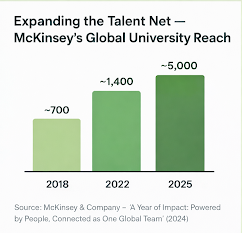
That idea isn’t completely true anymore. In fact, firms like McKinsey & Company have openly shared that they now hire from nearly 1,400 universities worldwide, which is double the number they recruited back in 2018. And they’re not stopping there, their goal is to expand that to 5,000 universities in the coming years.
So, what does this really mean? It means that the consulting world is slowly ditching the obsession with fancy college labels and focusing more on what you bring to the table.
This shift is huge, especially for students from Tier-2 and Tier-3 colleges in India. Today, you can apply to consulting firms if you bring the right qualities to the table, things like creativity, leadership, curiosity, and a strong performance during the selection process.
In simple terms, consulting is no longer reserved for students from elite colleges. It’s becoming a field where what you can do matters far more than where you studied.
The Modern Consulting Landscape
The consulting world today looks very different from what it used to be. Earlier, it was mostly limited to traditional business strategy and dominated by a handful of elite firms and Ivy League graduates. But now, consulting has grown into a huge and diverse ecosystem. Engineers, economists, designers, data scientists, and many other profiles are finding their place in the industry.
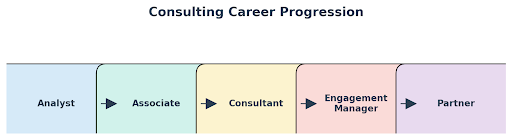
At the very top are the famous MBB firms namely, McKinsey & Company, Boston Consulting Group (BCG), and Bain & Company. These are the big names everyone talks about, known for working on high-stakes corporate strategy and advising top executives on billion-dollar decisions. They are still considered the gold standard in consulting, often advising Fortune 500 companies on billion-dollar decisions.
Next comes the Big Four firms: Deloitte, EY, PwC, and KPMG. These firms are massive in size and scope. They do much more than strategy, covering areas like risk advisory, digital transformation, finance, and operations. To put things in perspective, Deloitte alone has more than 400,000 employees worldwide, making it one of the largest consulting employers globally.
Then there are boutique and specialised consulting firms, which are often underrated but are incredibly interesting. Companies like Alvarez & Marsal, ZS Associates, and Dalberg focus on niche areas like restructuring, healthcare analytics, and social impact. These firms usually offer steeper learning, closer interaction with clients, and sometimes a better work–life balance, which is great if you prefer depth over sheer scale.
Today, a consultant might help build an AI-driven supply chain one day and design a market-entry strategy for an FMCG company the next. With remote work and tech-driven problem-solving becoming common, consulting is also becoming more inclusive and accessible, especially for students from Tier-2 and Tier-3 colleges in India.
The New Hiring Reality: What Firms Actually Look For
The consulting industry is moving away from judging candidates by college names and towards evaluating them based on skills and performance. Firms are increasingly focusing on how candidates think, solve problems, and create impact, rather than their educational pedigree. Supporting this shift, a McKinsey study found that skill-based hiring predicts job performance five times more accurately than hiring based purely on educational background.
So what do recruiters actually look for?
Problem-solving skills- You should be able to break down complex problems and give clear, structured solutions. Case interviews are still the main way firms test this.
Storytelling with data- Anyone can show a chart, but stories drive decisions. Recruiters love candidates who can turn insights into clear recommendations.
Analytical ability- You’re expected to work with data, spot patterns, and back your ideas with logic. Comfort with numbers and frameworks is a big plus.
Clear communication- A good idea means nothing if you can’t explain it well. Consultants need to be clear, persuasive, and action-oriented.
Adaptability and teamwork- Consulting is a fast-changing world where new teams, new industries, and new challenges are the typical standard. Being flexible and collaborative really matters., so firms want people who can collaborate and handle uncertainty.
Strong soft skills- Leadership, empathy, time management, and client handling still matter a lot. Consulting is as much about people as it is about analysis.
In short: Consulting today rewards preparation and skills, not college names. If you think clearly and build the right toolkit, you’re in the game, no matter where you studied.
Building a Strong Foundation Without the Ivy Tag
Consulting firms value clear thinking, deep analysis, and real impact. A strong foundation in Economics, Mathematics, Statistics, or Data Analytics signals the analytical rigor needed to turn data into business insight. Comfort with tools like Excel, Power BI, and SQL, along with structured, hypothesis-driven problem-solving, is essential.
Equally important are communication skills- clear writing, strong presentations, and storytelling with data to influence clients and stakeholders. Certifications from platforms like Coursera, Harvard Online, IIMs, or LinkedIn Learning show initiative and continuous learning in strategy and analytics.
Practical exposure through consulting clubs, live projects, and case competitions builds real-world problem-solving, teamwork, and presentation skills. Live projects offer hands-on client and market experience, while case competitions test speed, structure, and creativity under pressure.
Together, academic strength, practical experience, and communication skills create a strong, skill-focused profile for consulting careers.
Gaining Practical Experience That Counts
In consulting, what really makes you stand out is the impact you create, not just the goals you talk about. Internships at startups, analytics firms, NGOs, or in strategy roles are a great way to see how businesses actually function and what clients truly care about. That said, internships aren’t the only path.
- Pursue research assistantships with professors on applied projects like econometric modeling for local businesses or SME sustainability audits. Publish on SSRN for visibility and analytical proof.
- Take leadership in student groups like entrepreneurship cells or consulting clubs advise peers, organise speaker events, and quantify impact.
- Build a portfolio of mini-consulting projects: Analyse Kaggle datasets on Indian sectors such as e-commerce or renewables, then share recommendations on GitHub or a blog to demonstrate initiative.
In consulting, sustained effort and real-world experience carry far more weight than the brand name of your institution
Networking Without a Pedigree
Strategic networking is essential to ensure your experience gets noticed especially for candidates from non-target institutions. The goal isn’t collecting contacts, but building meaningful relationships that provide insight, guidance, and referrals.
Instead of chasing senior leaders who are often unavailable, connect with Associates and Business Analysts who have recently gone through the hiring process. Keep outreach purposeful and personalized – reference a firm initiative, article, or project, and ask for a brief, focused insight to show respect for their time.
Leverage alumni networks, particularly seniors in consulting, for relevant and practical advice. Participate in firm webinars, LinkedIn Live sessions, and case workshops to build skills while increasing visibility and familiarity.
Finally, seek mentorship through platforms like PrepLounge or firm programs. Mentors offer feedback and real interview perspective, helping ensure you’re remembered not as just a resume, but as a prepared and intentional candidate.
Resume and Interview Mastery
As experience and networks come together, candidates must focus on the final hurdles of consulting recruitment: resume screening and interviews. A strong consulting resume isn’t about college brand names it’s about clarity, structure, and measurable impact. Recruiters value crisp formats with strong action verbs, clearly defined responsibilities, and quantifiable outcomes that show real contribution. Tailoring the resume to reflect firm-specific values like collaboration, leadership, and intellectual rigor further boosts relevance.
A well-built resume leads into the case interview, the core of consulting hiring. Case preparation requires more than memorising frameworks it demands learning how to apply them in real business situations. Casebooks and platforms like Victor Cheng’s Case Interview Secrets, PrepLounge, and XCC’s annual casebook help develop structured, practical thinking aligned with consulting standards.
Live case practice is critical. Mock interviews and competitive case settings sharpen problem-solving under time pressure and simulate real interview conditions.
Alongside cases, the fit interview assesses cultural alignment. Strong answers to questions like “Why consulting?” and “Why this firm?” should be grounded in personal experiences that highlight motivation, problem-solving ability, and values. Mastering both case performance and personal storytelling significantly improves the chances of securing a consulting offer.
Alternative Pathways into Consulting
You don’t need to start your consulting journey at big names like McKinsey or BCG to build a strong career. There are plenty of other paths that can help you gain real experience, sharpen your skills, and understand how consulting actually works. Working with smaller firms, stepping into analytics roles, or even taking up freelance projects can all help you build the mindset and credibility that consulting demands.
Starting small with specialized firms is often a smart move. Companies like Zinnov, Avalon Global, and Indus Valley Partners typically have lean teams, which means you get meaningful responsibility early on. You learn directly from senior professionals, work across different projects, and gain hands-on exposure that helps you grow faster and prepares you for bigger opportunities later.
Corporate strategy roles are another solid entry point. Many large groups, such as Tata, Aditya Birla, and Reliance, have internal strategy or consulting teams. These roles involve solving complex business problems, working closely with leadership, and gaining insights that can later translate well into external consulting or senior management positions.
Analytics, finance, and product roles also align closely with consulting. These positions require structured thinking, data analysis, and problem-solving, all core consulting skills. Building depth in any of these areas gives you experience that easily transfers into consulting work.
Freelance and startup projects can be just as valuable. Working independently or with early-stage companies lets you take ownership, solve real business problems, and show tangible impact. This kind of experience clearly signals initiative and practical thinking.
Finally, there are bridge programs for non-traditional entrants, such as McKinsey’s Next Generation initiative. These programs are designed to support candidates from non-MBA or unconventional backgrounds by offering mentorship and structured learning to ease the transition into consulting.
At the end of the day, your first consulting role doesn’t have to come from a famous brand. What really matters is learning how to think and work like a consultant, approaching problems with structure, curiosity, and a strong focus on creating real impact.
Mindset and Growth: Playing the Long Game
Think of breaking into consulting as a marathon, not a sprint. You’ll hit rejections and self-doubt often, but treat them as key steps in your growth, not proof you’re not cut out for it. Long-term success in landing consulting roles hinges on resilience, steady effort, and learning from reflection far more than any single win.
Build a consulting mindset by honing structured analytical skills paired with a client-focused drive that always prioritizes real impact. Keep sharpening your abilities and jump into professional communities. Engaging with forums and student groups like XCC keeps you updated on industry trends and provides peer support. These connections are crucial for sustained growth and adaptability in your career.
Conclusion: Performance Over Pedigree
The consulting industry has progressively evolved beyond its historical association with elite academic institutions, embracing a more merit-driven approach to talent identification. As discussed, success in consulting is no longer determined by institutional affiliation but by a combination of deliberate skill development, practical exposure, and rigorous preparation. From building networks without traditional pedigree advantages to mastering case interviews, the defining factor remains an individual’s ability to think critically, demonstrate leadership, and deliver measurable impact. While academic pedigree may facilitate initial access, sustained performance ultimately determines both entry and long-term success within the consulting profession.
Key Takeaways
- Consulting firms like McKinsey now recruit from a wider range of schools, valuing skills such as structured problem-solving, analytical rigor, and clear communication over academic pedigree.
- Compete effectively by mastering core consulting skills data analysis, problem-structuring, and presentation while gaining hands-on experience through internships and case competitions.
- Strengthen your profile with relevant certifications that demonstrate your analytical and strategic capabilities.
- Networking is crucial for non-target school candidates to build authentic relationships with alumni and recent hires, attend firm events, and seek mentorship opportunities.
- Explore alternative entry routes such as boutique consulting firms, corporate strategy roles, or analytics and product management positions that build transferable skills.
- Stay resilient throughout the journey success in consulting recruitment requires persistence, adaptability, continuous learning, and a client-focused mindset.
Frequently Asked Questions (FAQ)
1. I’m from a Tier-2/Tier-3 college. Can I really get into McKinsey or BCG?
Ans: Yes, absolutely. These firms have explicitly stated goals to hire from a much wider pool of universities. They are increasingly skills-based, meaning your ability to solve cases, demonstrate leadership, and communicate structured thinking matters far more than your college tag.
2. What are the most important skills I need to develop for a consulting career?
Ans: The core skills important for a career in consulting are:
- Problem-Solving: The ability to break down complex business problems.
- Analytical Rigor: Comfort with data and logical reasoning.
- Structured Communication: Presenting ideas clearly and persuasively.
- Storytelling with Data: Turning analysis into a compelling narrative for action.
3. How can I network effectively if I don’t have any connections at these firms?
Ans: Start with associates and business analysts (not just partners), as they are more accessible. Use LinkedIn to send value-based messages, mentioning their work. Leverage your alumni network and actively participate in firm webinars and case workshops to get your name recognized.
4. Besides MBB, what are other good ways to start a consulting career?
Ans: Excellent alternative pathways include:
- Specialized Boutiques: Firms like ZS Associates (healthcare) or Dalberg (social impact).
- The Big Four: Deloitte, EY, PwC, and KPMG have vast consulting practices.
- Corporate Strategy: Internal strategy teams at large companies like Tata or Reliance.
- Bridge Programs: Initiatives like McKinsey’s Next Generation for non-traditional candidates.
5. What should I focus on most if I have limited time to prepare?
Ans: Prioritise case interview mastery. This is the universal filter. Deeply study casebooks, practice frameworks, live with a partner, and learn to structure your thinking under pressure. A strong case performance can often outweigh other profile gaps.